THE PLAYBOOK · CFPPAXLB
Kakuro: rules and examples
Bring your attention to one round of Kakuro. Complete a 4×4 sum grid with digits 1–9, no repeats in any row or column, and the displayed totals. Keep the game area visible while you use its controls. Use the opening round to become familiar with the layout. Use the example below to understand a decision.
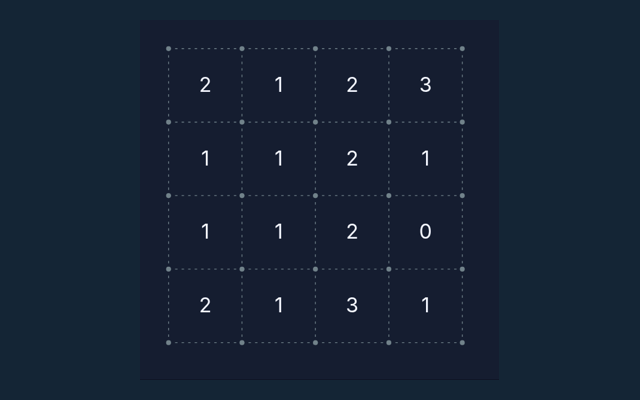
Practise sums on twelve small, unblocked 4×4 grids. These teaching boards use whole-row and whole-column totals rather than the blocked runs of classic Kakuro.
Practice beyond the first move
Read one step at a time and try it on the playing area. Match the instruction to the control you use. Notice the feedback after each input.
The goal to keep in mind
Complete a 4×4 sum grid with digits 1–9, no repeats in any row or column, and the displayed totals. Keep that objective in view throughout the round. Notice how the game responds to your input.
The playing sequence
- Compare a row total with its fixed entries.
- Use the column total for the same blank.
- Enter digits 1–9.
- Check puzzle verifies totals and non-repetition.
How to interact with the game
Click or tap squares or graph edges. Number boards include a digit pad. Undo reverses the previous change; Check puzzle validates the solution. A careful first action helps you become familiar with the layout. Use the visible help when you are unsure of the next input.
A closer look at one example
A row total 18 with fixed values 2, 4 and 7 requires 5 in the remaining cell. Your next round may have a different position, so inspect it before acting. Notice the change in the playing area.
Avoid this misunderstanding
Repeated digits in a run are forbidden even when the sum matches. Compare the situation with the worked example. Watch the feedback after an action. A message can explain whether the input was accepted or whether a rule needs attention.
If you are unsure
While reading the Guide, what is the goal of Kakuro?
Here is the relevant explanation: Complete a 4×4 sum grid with digits 1–9, no repeats in any row or column, and the displayed totals.
Before I begin, how do I control Kakuro?
Click or tap squares or graph edges. Number boards include a digit pad. Undo reverses the previous change; Check puzzle validates the solution.
As a new player, what example helps explain Kakuro?
The key detail is this: A row total 18 with fixed values 2, 4 and 7 requires 5 in the remaining cell.
On this playing page, what should I watch out for in Kakuro?
Keep this in mind: Repeated digits in a run are forbidden even when the sum matches.
For a quick reminder, what format does Kakuro offer?
Here is the relevant explanation: Practise sums on twelve small, unblocked 4×4 grids. These teaching boards use whole-row and whole-column totals rather than the blocked runs of classic Kakuro.
For my first round, which play mode does Kakuro use?
The mode on this page is Solo. Same-device play uses one screen; this game library does not provide internet matchmaking.